Your resume has one job: get you into the room. This chapter teaches you the strategy behind every word: from action verb selection and quantification to ATS formatting and the psychology of how hiring managers actually read documents.
A 2018 eye-tracking study by Ladders Inc. found that recruiters spend an average of 7.4 seconds on an initial resume scan. They're not reading: they're pattern-matching. Understanding that distinction changes everything about how you write.
A resume isn't a record of where you've been. It's a prediction of what you'll do next. Every word on the page should answer one question: why should this company believe you can succeed in this specific role?
A resume is a two-part document. The first part is your Assertions Section: your summary, objective, and headline skills that make claims about who you are. The second is your Evidence Section: the experience, education, and accomplishments that back those claims up.
Most students write only the Evidence Section and hope the reader connects the dots. Employers don't connect dots. They move on to the next resume.
Before writing a single bullet point, answer three questions: What makes a perfect candidate for this job? What does the employer want and need? What special abilities would set an exceptional candidate apart? Your resume is the answer to those questions: not a biography of your life.
Every component serves a strategic purpose. Understanding why each section exists helps you write each one more effectively.
| Section | What Goes Here | Strategic Purpose | Common Failure Mode |
|---|---|---|---|
| Contact Information | Full name (large), phone, professional email, city, LinkedIn URL. Optional: visa status | Immediate professional credibility. Your name is your brand. | Unprofessional email (starcraftking@hanmail.net) undermines everything below it |
| Professional Summary | 3-4 sentences highlighting your most relevant skills, experience, and what you bring to this specific role | The "headline" that earns the recruiter's next 30 seconds of attention | Vague, generic sentences like "hardworking team player seeking opportunities to grow" |
| Highlight of Qualifications | 5-6 concise bullet points showcasing your strongest, most relevant capabilities | Skimmable proof of fit before the reader reaches your experience section | Listing soft skills without evidence ("excellent communicator") |
| Education | Institution, location, degree, major/minor, graduation date, GPA (if 3.0+), relevant courses, honors | Most important section for recent graduates: establish academic credibility | Listing GPA of 2.8 or lower; omitting relevant coursework when you have no work experience |
| Experience | Employer, location, dates, job title, 3-5 bullet points per role using strong action verbs and quantified results | The evidence that backs up your claims: shows what you've actually done | Writing job descriptions ("answered phones") instead of achievements ("handled 80+ customer calls daily, maintaining 98% satisfaction rating") |
| Skills | Computer skills, languages (with proficiency level), technical certifications | Hits the ATS keywords; shows range of technical capability | Listing "Microsoft Word" as a skill in 2026; listing skills without context |
"A resume isn't just a list of past jobs. It's about YOU: how you performed and what you accomplished, especially achievements relevant to the job you're seeking."Matthew Clement, Career Communications Chapter 3
Weak resumes describe tasks. Strong resumes describe achievements. The difference almost always starts with the first word of each bullet point: the action verb.
Every experience bullet point must begin with a strong, specific action verb in the appropriate tense: past tense for previous roles, present tense for your current one. Never begin with "I," "Responsible for," "Duties included," or "Helped to."
Recruiters can't verify your claims: but they can assess their credibility. Specific numbers create credibility. Vague claims create skepticism. Here's the formula.
If you genuinely can't quantify, use qualitative specificity: scope, context, scale, and outcome. "Organized events" is weak. "Organized 4 departmental workshops averaging 40 attendees each, coordinating scheduling, venue, and materials for a 200-person university club" is strong even without a percentage improvement.
The difference between a resume that gets ignored and one that earns a callback usually comes down to a handful of specific, fixable problems. Here they are in plain sight.
Hardworking and dedicated recent graduate seeking a position where I can use my skills and grow professionally. I am a team player and quick learner who is excited about new opportunities.
Marketing Communications graduate from Hanyang University with hands-on experience in social media strategy, SEO, and K-beauty campaign analysis. Completed Google Digital Marketing Certificate and led a content project averaging 1,200 views per article. Seeking a Marketing Communications Internship at Amorepacific to contribute data-driven campaign strategy.
• Worked at coffee shop • Helped customers • Made coffee • Did some social media • Responsible for opening/ closing duties
• Served 80-100 customers daily during peak morning rush, maintaining average wait time under 4 minutes • Created and managed Instagram content calendar; grew café's following from 340 to 2,100 in 5 months • Trained 3 new staff members on POS system and customer service protocols • Handled daily cash reconciliation of ₩800,000 to ₩1.2M with zero discrepancies over 14-month tenure
These aren't rare edge cases. They appear on the majority of student resumes submitted in class, and on a significant percentage of real applications sent to real companies. Learn to recognize them in your own work before a recruiter does.
starcraftking@hanmail.net, partygirl123@hotmail.com, cool_oppa99@naver.com. Your email address is the first thing an HR manager sees before opening your resume. One glance ends your application before it begins.
"Responsible for answering phones and helping customers" tells the employer nothing about how well you did the job. Every resume says people "worked hard." Only strong resumes prove it with evidence.
"Hardworking team player seeking opportunities to grow" says nothing that distinguishes you from any of the other 200 applicants. A generic summary is functionally the same as no summary at all.
In Korea and internationally, large companies route applications through Applicant Tracking Systems before any human reads them. A resume with the wrong format or missing keywords gets filtered out automatically, often before a single person sees it.
Multi-column layouts, graphics, icons, and creative design elements may look impressive but break ATS parsing and make it harder for recruiters to find key information. A 3-page resume as a new graduate signals poor judgment about relevance.
Age, photo, marital status, blood type (despite common Korean practice), and physical characteristics have no place on an international-standard resume. Including them raises red flags about your understanding of professional norms.
The most effective way to improve your own resume is to diagnose someone else's. These case studies are drawn from real examples: with the specific errors and strengths that make them instructive.
Justin's resume is two pages long and covers a decade of activity. Yet when you read it carefully, almost none of the bullets describe what he actually achieved. They describe what he was supposed to do. "Responsible for managing a team of 10." "Duties included coordinating with external vendors." "Helped with customer onboarding process." The form is right: proper sections, correct chronological order, respectable companies. But it has no evidence. It's assertions without proof.
The deeper problem: Justin's resume reads as if he attended those jobs rather than performed them. The question a recruiter asks after reading isn't "Can I see myself working with this person?" but "Was this person actually effective at anything?"
The fix is not to add more details: it's to replace descriptions with outcomes. Not "coordinated with external vendors" but "negotiated revised delivery terms with 4 key vendors, reducing average lead time from 18 to 11 days and cutting logistics costs by ₩12M annually."
Attending a job and excelling at a job look identical on a bad resume. The difference only appears when you force yourself to write specific, measurable outcomes for every role.
Anita's resume contains some of the most creative writing in any job application ever seen in a classroom setting. As Camp Program Director, she "served millions of customers each summer through a multi-galaxy program schedule" and "supervised a multi-planetary and interdimensional camp staff." Her marketing plan was "quantum." Her 2025 achievement of 610,000 camp participants was "one of the largest camps in the Universe."
The instinct behind Anita's approach is understandable: she wanted to seem impressive. But the approach reveals a fundamental misunderstanding of what employers are actually looking for. No recruiter needs you to serve millions of customers. They need you to handle a realistic workload reliably and professionally. Actual numbers: "served 850 campers across three sessions" or "managed a staff of 22 counselors": are more impressive than absurdist fiction because they're believable.
The danger Anita's resume illustrates is that embellishment has a way of compounding. One exaggeration requires another to support it. Before long, the document describes a person who couldn't possibly exist, and any sophisticated recruiter recognizes it immediately.
The most compelling thing on a resume is a specific, believable number. Modesty with precision beats exaggeration every time. "Served 850 campers" is more compelling than "served millions" because it's verifiable and shows judgment.
Consider this summary from a third-year Business Administration student targeting a Marketing Communications Internship at Amorepacific: "Marketing Communications candidate at Hanyang University with demonstrated content strategy experience through Hanyang Business Review, where articles average 1,200+ views. Completed Google Digital Marketing Certificate with hands-on work in SEO, social media analytics, and K-beauty campaign research. Seeking a Marketing Internship at Amorepacific to apply brand storytelling skills to a market leader's global content strategy."
What makes this work: it names the specific company (Amorepacific), references a real credential (Google Certificate), quantifies a real achievement (1,200+ views), and explains the connection between the student's background and this particular role. No version of this sentence could belong to anyone else applying for this job.
A strong summary is specific enough that swapping the name at the top would require rewriting the whole thing. If your summary could belong to any applicant, it belongs to none of them.
The choice between a resume and a CV is not about preference. It's about context, audience, and convention. Sending the wrong document signals that you don't understand your field.
| Aspect | Resume | Curriculum Vitae (CV) |
|---|---|---|
| Typical Length | 1-2 pages maximum | 2+ pages; as long as necessary |
| Focus | Concise highlights tailored to the specific role | Comprehensive career and academic history |
| Primary Use Cases | Corporate roles, internships, most non-academic jobs | Academic positions, research roles, grant applications, international applications (Europe, Middle East, Asia) |
| Customization | Must be tailored for every single application | Generally consistent; minor emphasis adjustments |
| Unique Sections | Professional Summary, Highlights of Qualifications | Publications, Presentations, Research Projects, Grants, Teaching Experience, Conference Activity |
| Korea Context | Standard for most corporate and startup applications | Expected for professor and research positions; also used for international job applications |
Korean companies often require a standardized application form (이력서, i-ryeok-seo) rather than a Western-format resume. However, understanding Western resume principles remains essential: many Korean companies with international operations, as well as any multinational hiring in Korea, will expect the standards covered in this chapter. The distinctions between documents are covered in depth in Chapter 8.
Seeing strong resume principles applied in real time: by working professionals and recruiters: accelerates your understanding faster than reading alone.
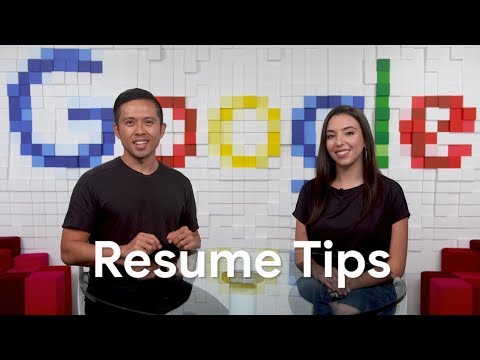
Google Career Tips
Google's hiring team walks through exactly what they look for: and what makes them stop reading. The principles apply universally.
ATS Resume Strategy
A recruiter at a major Korean conglomerate explains exactly how their ATS scoring works: and what applicants consistently get wrong about formatting and keywords.
Korean Job Market
A Hanyang University career counselor compares the Korean standardized 이력서 format against the Western resume structure: and explains when to use each in the Korean job market.
The frameworks in this chapter draw on a body of professional development research. These are the books, thinkers, and resources worth exploring in depth.
The canonical job-hunting guide, updated every year for five decades. The resume chapters specifically address the shift from task-based to achievement-based writing. Required reading for understanding how employers think.
Practical, structured, and applicable regardless of industry. Excellent for understanding the logic behind why certain resume elements work: and the psychology of why recruiters stop reading when they do.
Industry-specific resume advice with hundreds of example bullets across professions. Particularly useful for understanding how language norms differ by field and seniority level.
Written by a former Google recruiter. Explains explicitly what top-tier technology and consulting companies look for: and how to reverse-engineer your background to match their filters.
Not a resume book, but the best framework for the question behind the resume: who are you applying to be? The "Workview" and "Lifeview" exercises in this book directly inform strong resume summaries.
Recruiters' initial scan of a resume averages 7.4 seconds, with attention concentrated primarily on the name, current title and company, start and end dates, and the top two-thirds of the first page.
Ladders Inc. Eye-Tracking Study (2018): "You Only Get 7.4 Seconds"Resumes that include quantified achievements receive 40% more interview callbacks than those describing tasks and responsibilities without measurable outcomes, even when the underlying experience is identical.
ResumeGo Research Study (2021): "The Power of Numbers in Job Applications"Over 98% of Fortune 500 companies use ATS systems, and an estimated 75% of resumes are rejected by the ATS before a human sees them: primarily due to formatting issues and keyword mismatch rather than candidate underqualification.
Jobscan ATS Research (2023): "How ATS Works and Why It Matters"Check off each item as you apply it to your own resume. Your progress saves automatically in your browser.
Course materials are for enrolled students only.
Contact clementmj@hanyang.ac.kr for access.